
Zero Waste at RAM: Sustainability and Care
Art can be a powerful catalyst for individual, community, and environmental well-being. At the Racine Art Museum (RAM), this belief shapes a growing commitment to sustainability—one that connects creative practice with health, care, and responsibility to the natural world. Through exhibitions, education, and hands-on making, RAM’s Zero Waste Initiative explores how art can rethink consumption while supporting more mindful, regenerative ways of living.
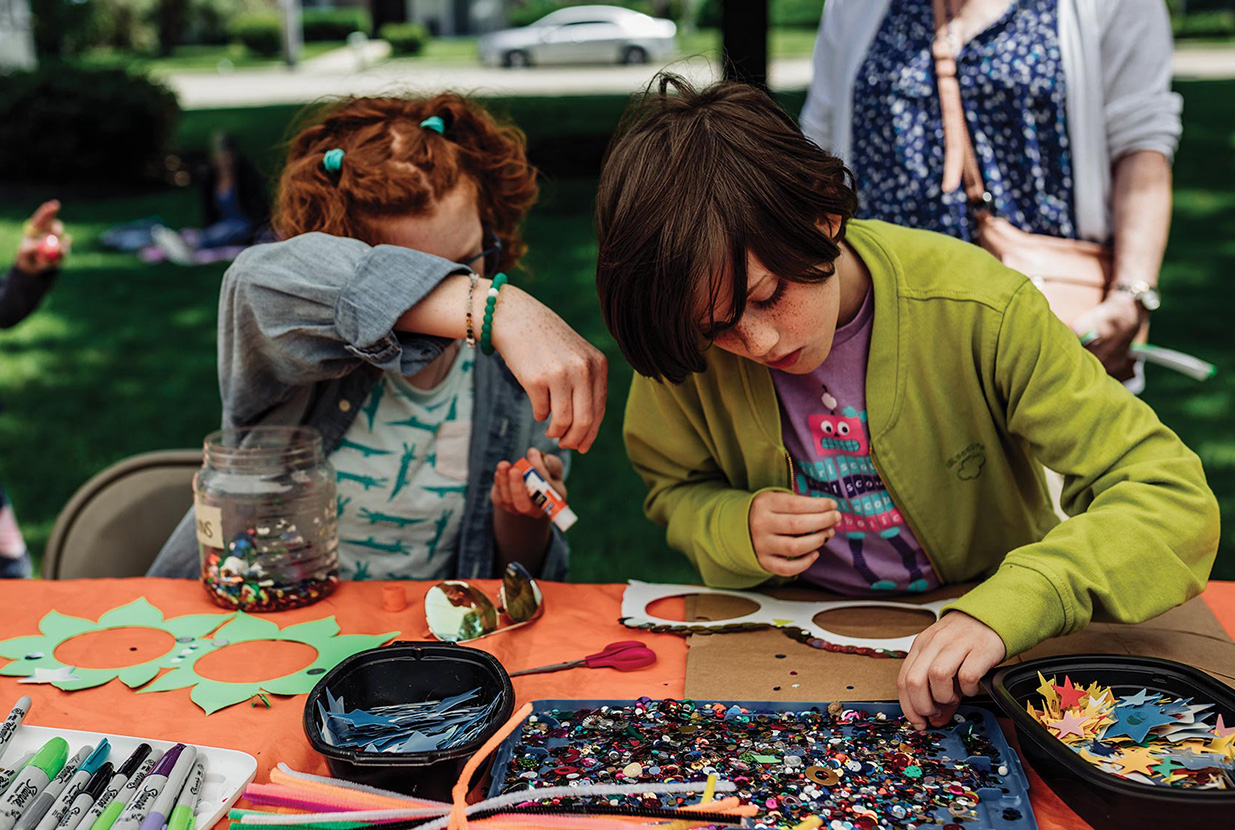
At its core, this work recognizes that sustainability is not only environmental, but also deeply connected to human experience. Health and well-being are shaped by the spaces we inhabit and the materials we engage with. By integrating creative sustainability practices into its programs, RAM strengthens relationships between art, nature, and community—encouraging reflection, care, and connection. In doing so, the museum supports artists and creatives whose work is actively shaping environmentally conscious practice, amplifying their role as innovators responding to urgent ecological questions.
This approach is grounded in a simple idea: care is a creative act. Whether through mending what is broken, reimagining discarded materials, or transforming the familiar into something new, artists reveal the possibility of renewal. In this sense, art becomes sustenance—supporting mind, body, and spirit while engaging directly with the environmental realities of our time.
RAM’s Zero Waste Art Initiative brings these ideas into practice through learning opportunities and community collaboration. One key program engages eighth-grade students in hands-on art-making using recycled and reclaimed materials collected in partnership with local manufacturers. These experiences invite participants to see waste not as an endpoint, but as a beginning—an opportunity for imagination, problem-solving, and transformation. They also connect students to broader conversations about environmental responsibility and the role of creative thinking in shaping more sustainable futures.
The museum’s exhibition program extends this dialogue into the galleries. Past RAM exhibitions such as Zero Waste: Objects and Zero Waste: Jewelry highlighted artists who repurpose materials originally intended for other uses, from packaging and textiles to industrial fragments. These works challenge assumptions about value and permanence while encouraging viewers to reconsider everyday consumption. Additional exhibitions, including Lost and Found and Consumer Couture, further explored how discarded and familiar materials can be transformed into layered expressions of culture, identity, and critique.
These efforts are supported by a broader institutional commitment to sustainable practice. RAM works to implement strategies such as carbon-neutral shipping, reusable packing materials, eco-conscious installation methods, and reduced-waste exhibition processes whenever possible. Sustainability also extends into daily operations through the RAM Store, which highlights many ethically sourced, biodegradable, and environmentally responsible goods.
Sustainability is also embedded in the museum’s physical environment. RAM Downtown incorporates design elements that support energy efficiency and material reuse, including recycled flooring and translucent architectural features that maximize natural light. These choices reflect a long-term understanding that sustainability is not a single initiative, but an ongoing practice embedded across both infrastructure and programming.
Collaboration is central to this work. Our programs are strengthened through partnerships with local manufacturers, civic organizations, and sustainability groups. These relationships connect creative practice with broader community goals, including waste reduction, environmental awareness, and the development of more resilient local systems. They also reinforce the museum’s role in supporting artists working with ecological systems, circular material use, and regenerative design approaches.
Across all of these efforts, the Zero Waste Initiative is guided by a larger vision: that art can reshape how we understand our relationship to materials, consumption, and care. Found objects and reclaimed materials become more than artistic media—they become points of connection between memory, environment, and possibility.
In this way, sustainability at RAM is not only about reducing waste, but about expanding awareness. It fosters a culture where creativity supports environmental responsibility, and where making becomes a form of care—for each other, for the community, and for the planet.
As these initiatives continue to evolve, they reflect a growing belief at our museum: that cultural institutions play an essential role in shaping healthier, more sustainable futures. Through creativity, collaboration, and care, RAM continues to help build a community where both people and the environment are given space to thrive.