
SPARK!: Living Artfully with Memory Loss
Arts and culture have the power to create meaningful, grounding experiences for people living with Alzheimer’s disease and other forms of memory loss. At the Racine Art Museum (RAM), this belief takes shape through SPARK!—a creative engagement program designed for individuals with memory loss and their care partners. Developed to provide a stimulating yet non-threatening environment, SPARK! encourages active participation while fostering a sense of accomplishment, dignity, and personal worth.
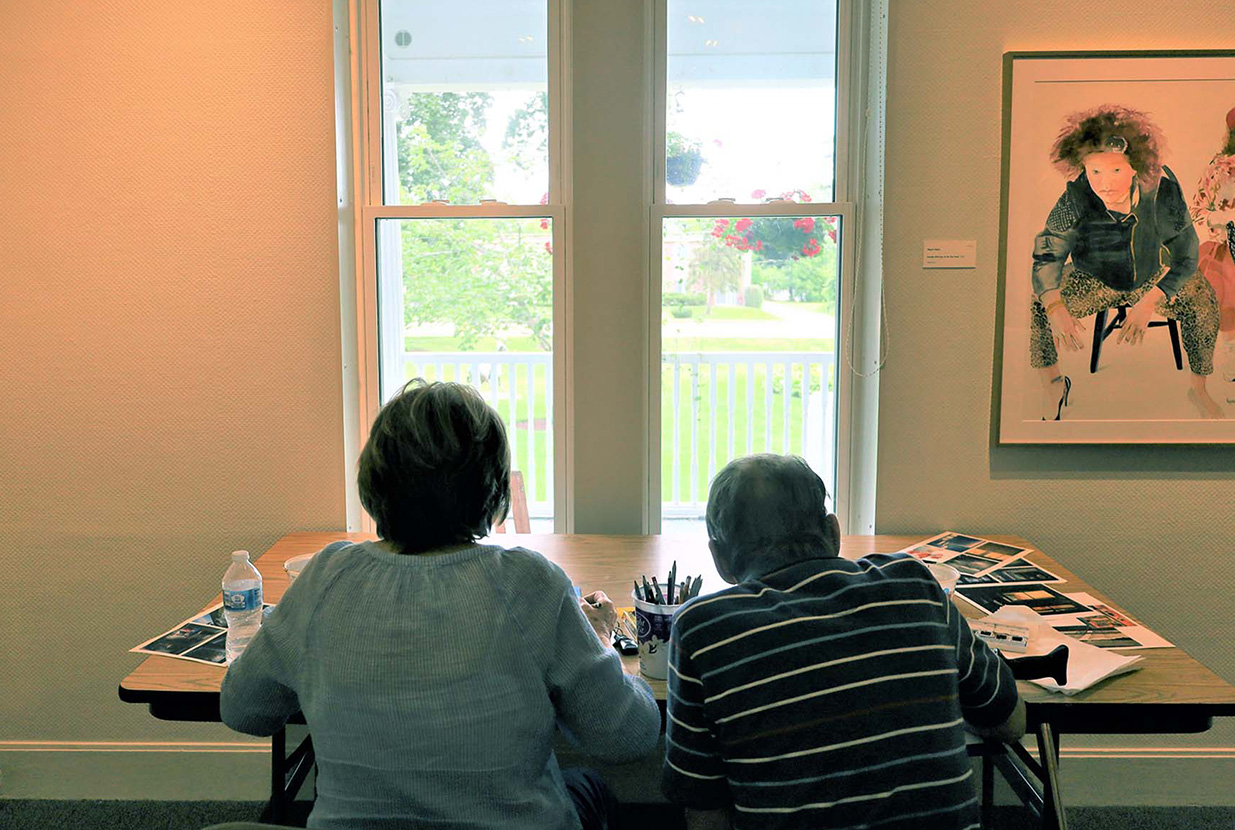
Each month, participants gather at RAM and in community-based settings for free, welcoming programs that combine art looking, hands-on art making, reflection, and conversation. These sessions are intentionally designed to be accessible and engagement-focused, emphasizing process over product and inviting participants to connect through curiosity, sensation, and shared experience rather than memory recall. In this space, art becomes a powerful tool for presence, expression, and human connection.
SPARK! is grounded in a multidisciplinary approach that integrates visual art, sensory exploration, creative writing, poetry, music, and movement. These varied entry points are essential: while memory may change, the capacity for emotional response and creativity remains. By engaging these pathways, SPARK! supports quality of life and emotional well-being for participants and their care partners alike.
Since its founding in 2009, SPARK! has been shaped through collaboration with leaders in aging and memory care, including the Alzheimer’s Association, the UW–Milwaukee Aging Resource Center, and Racine County’s Aging and Disabilities Resource Center. These partnerships inform program design and serve as critical referral networks, ensuring that individuals and families who can benefit most are able to participate.
RAM was honored to be selected by the Bader Foundation (now Bader Philanthropies Inc.) as one of the first museums in the Midwest to pilot this model. From the beginning, SPARK! has been both a local initiative and part of a broader effort to reimagine how cultural institutions contribute to healthy aging and community well-being.
Recognizing that access can be a barrier, RAM expanded the program in 2011 with SPARK! on the Road—a mobile initiative that brings these creative experiences directly to assisted living communities, senior day centers, churches, and care facilities. By eliminating the challenges of transportation, SPARK! on the Road ensures that engagement, creativity, and connection are not limited by circumstance, significantly extending the program’s reach.
Over time, SPARK! has evolved into a sustained and replicable model of practice. RAM’s education team, alongside a network of partner organizations in the SPARK! Alliance, has shared this work through presentations at local, regional, and national conferences for healthcare providers and museum professionals. This knowledge-sharing amplifies impact and positions SPARK! as a leading example of how arts-based engagement can support aging populations.
Equally important to SPARK!’s impact are the care partners who participate alongside individuals with memory loss. These shared experiences create opportunities for connection beyond daily caregiving roles, offering moments of mutual discovery, recognition, and joy. Within both museum and community settings, relationships are reframed through creativity, fostering deeper engagement and emotional connection.
Today, SPARK! sits at the intersection of art and care, reflecting a growing recognition that museums can play a vital role in supporting community health and well-being. For participants, the impact is immediate and deeply personal: a moment of recognition sparked by an artwork, the rhythm of a shared activity, or the satisfaction of creating something by hand. These experiences do not depend on memory—they depend on presence.
At RAM, SPARK! affirms that creativity does not diminish with memory loss—it transforms. With continued support from donors and partners, the program will expand its reach, deepen its impact, and ensure that individuals living with memory loss—and those who care for them—have access to meaningful, enriching cultural experiences that honor their humanity at every stage of life.