
In/Between: Where Intimacy Meets Spectacle
Extending beyond its walls, the Racine Art Museum (RAM) is creating new ways for people to encounter art—not only inside galleries, but throughout the places and spaces that shape everyday life. In/Between, RAM’s biennial festival of visual and performing arts, is one way this idea comes to life.
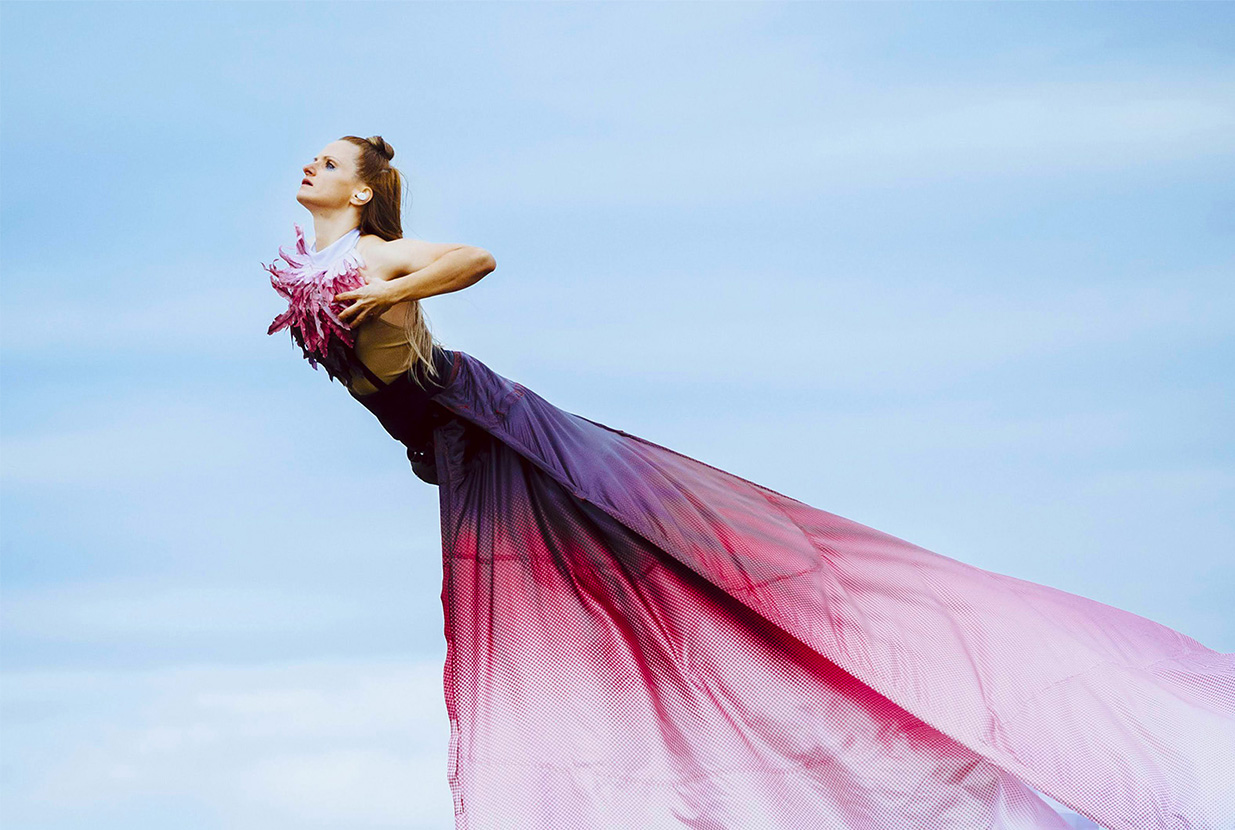
Developed as part of RAM’s broader “museum without walls” approach, In/Between is rooted in a simple premise: art should be accessible, participatory, and embedded in the communities it serves. By activating sites throughout Racine County—parks, lakefronts, historic locations, and other shared spaces—the festival invites people to experience creative work in environments that are familiar, yet newly transformed.
This begins with access. The majority of In/Between programming is free, lowering barriers and opening the door for broader public participation. But access is only part of the equation. The festival is equally focused on engagement—creating opportunities for people to connect with artists, ideas, and one another in ways that feel immediate and meaningful.
At the center of In/Between is contemporary craft, a field that challenges conventional boundaries between disciplines, materials, and forms of expression. Craft connects material and process, tradition and experimentation, function and expression. It also lends itself to forms that are not confined to static objects—expanding into performance, installation, and collaborative making. In this context, craft becomes a lens through which to explore how art can exist in motion, in public, and in dialogue with its surroundings. In this context, craft becomes not only object-based, but ephemeral, immersive, and participatory—something experienced as much as it is observed.
The festival unfolds through a range of interconnected activities designed to meet audiences in different ways. Exhibitions provide opportunities for close looking and reflection, while performances introduce movement, sound, and time-based experience into the public realm. Workshops and demonstrations invite hands-on participation, offering space to learn, experiment, and create. Wellness programs connect making with mindfulness and well-being, and social events create moments for gathering, conversation, and shared discovery.
Together, these elements form a flexible framework—one that supports both large-scale, highly visible projects and smaller, more intimate encounters. Bridging animation and form, beauty and utility, intimacy and spectacle, the festival creates a dynamic rhythm of experience across sites and scales. Some experiences may draw audiences to a specific site, while others emerge more organically within the flow of daily life. In each case, the goal is the same: to create points of connection between people, place, and creative practice.
While In/Between features work by regional, national, and international artists, the festival is not defined by any single project or participant. Instead, it is shaped by the relationships it builds—between disciplines, between sites, and between those who make and those who experience the work. Artists such as Amanda Browder, HOTTEA, and Look-Up Aerial Arts help anchor this vision, but they are part of a broader ecosystem that includes local partners, community initiatives, and ongoing cultural programs throughout the region.
Importantly, this work does not replace the museum—it expands it. RAM’s campuses continue to provide space for exhibitions, interpretation, and deeper engagement. In/Between builds on that foundation, extending the museum’s presence outward and creating new entry points for participation.
In doing so, the festival reflects a larger shift in how museums can operate: not as singular destinations, but as networks of activity and exchange. A waterfront can become a site for installation. A public gathering can become a performance. A familiar landscape can invite new ways of seeing and understanding.
In/Between is both an invitation and an ongoing exploration—one that asks what is possible when art moves beyond its traditional boundaries. By bringing people together through shared experiences of making, viewing, and discovery, it helps shape a more open, responsive, and inclusive cultural landscape—one that exists not only within walls, but all around us.