
Building a Collection by Hand: Bruce W. Pepich and the Making of RAM
Over the past five decades, Bruce W. Pepich has played a defining role in shaping how contemporary craft is understood, collected, and presented in the United States. Through his work at the Racine Art Museum (RAM), Pepich built the largest museum collection of contemporary craft in North America. This achievement was not the result of rapid expansion or trend-driven acquisition, but of a steady, intentional approach grounded in deep respect for artists, materials, and long-term relationships.
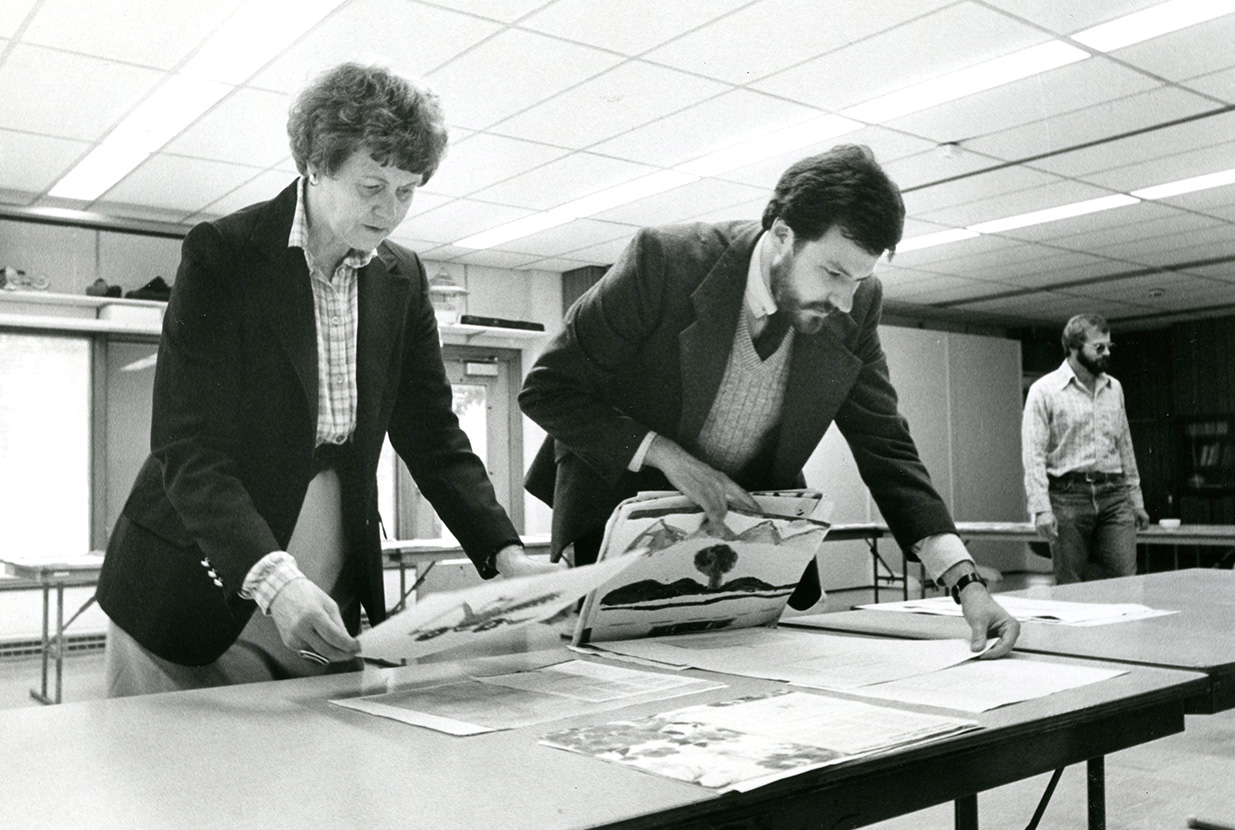
Pepich arrived in Racine in 1974, shortly after completing his degree in art history. He joined the Charles A. Wustum Museum of Fine Arts (now known as RAM Wustum) in what was intended to be a temporary, entry-level role. At the time, the museum’s collection was limited in size and its programming primarily regional in scope. Yet within this environment, Pepich recognized an opportunity to connect community engagement with contemporary artistic practice.
From the outset, his approach to collecting was guided by a clear and consistent philosophy: that craft merits the same level of curatorial rigor and critical attention as painting or sculpture. This belief informed his early work organizing exhibitions and national competitions that brought together artists working in ceramics, fiber, glass, metal, wood, and art jewelry as well as printmakers and watercolor painters. These efforts emphasized both quality and diversity of practice, while positioning craft within a broader dialogue about material, process, and the human experience.
In 1981, Pepich was appointed executive director, a role that allowed him to more fully realize a long-term vision for the institution. Under his leadership, the museum evolved into a two-campus organization—one emphasized studio classes and exhibitions dedicated to area artists while the other showcased the contemporary craft focus of the collection, often within the context of other media. This structure reflected a broader curatorial perspective that recognized craft as central to contemporary art discourse, rather than peripheral to it.
A pivotal moment in this evolution came in 2003 with the opening of RAM’s downtown facility (now known as RAM Downtown). This purpose-built facility provided a permanent home for the growing collection and established Racine as an important center for contemporary craft. With expanded space and visibility, the collection continued to grow—not only in size, but in depth and cohesion. What began as a few hundred objects made from a variety of materials and reflecting diverse artistic processes, has developed into a collection of more than 15,000 works, shaped through careful stewardship over time.
A defining characteristic of Pepich’s collecting strategy is its deliberateness. Rather than focusing on individual “signature” works, he prioritized the development of comprehensive groupings—bodies of work that trace an artist’s career, thematic clusters that explore material innovation, and holdings that reflect both national and international perspectives. As a result, the collection functions not as a static archive, but as an evolving narrative of contemporary art.
Relationships have been central to this process. Many significant acquisitions have emerged from sustained partnerships with artists and collectors who view RAM as a trusted steward of their work. These relationships have enabled the museum to build a collection that is both deeply personal and broadly representative of the field.
Equally important has been a commitment to inclusion and access. Pepich has worked to expand the range of voices represented in the collection, supporting makers whose contributions have not always been fully recognized within traditional museum frameworks, women artists, and artists of color. This emphasis has helped shape a collection that reflects a more complete and nuanced view of contemporary practice.
Today, the collection continues to grow and evolve, guided by the foundation Pepich established—one that is thoughtful, relational, and rooted in the enduring significance of handmade objects and creative expression. In recognition of his extraordinary contributions, and upon his retirement in 2024, the RAM Board of Directors bestowed upon him the title of Founding Director Emeritus, honoring both his foundational leadership and the lasting impact of his vision on the museum and the field of contemporary craft.